Launch offer — valid today only

📄 Digital book in PDF · read it on your phone or print it

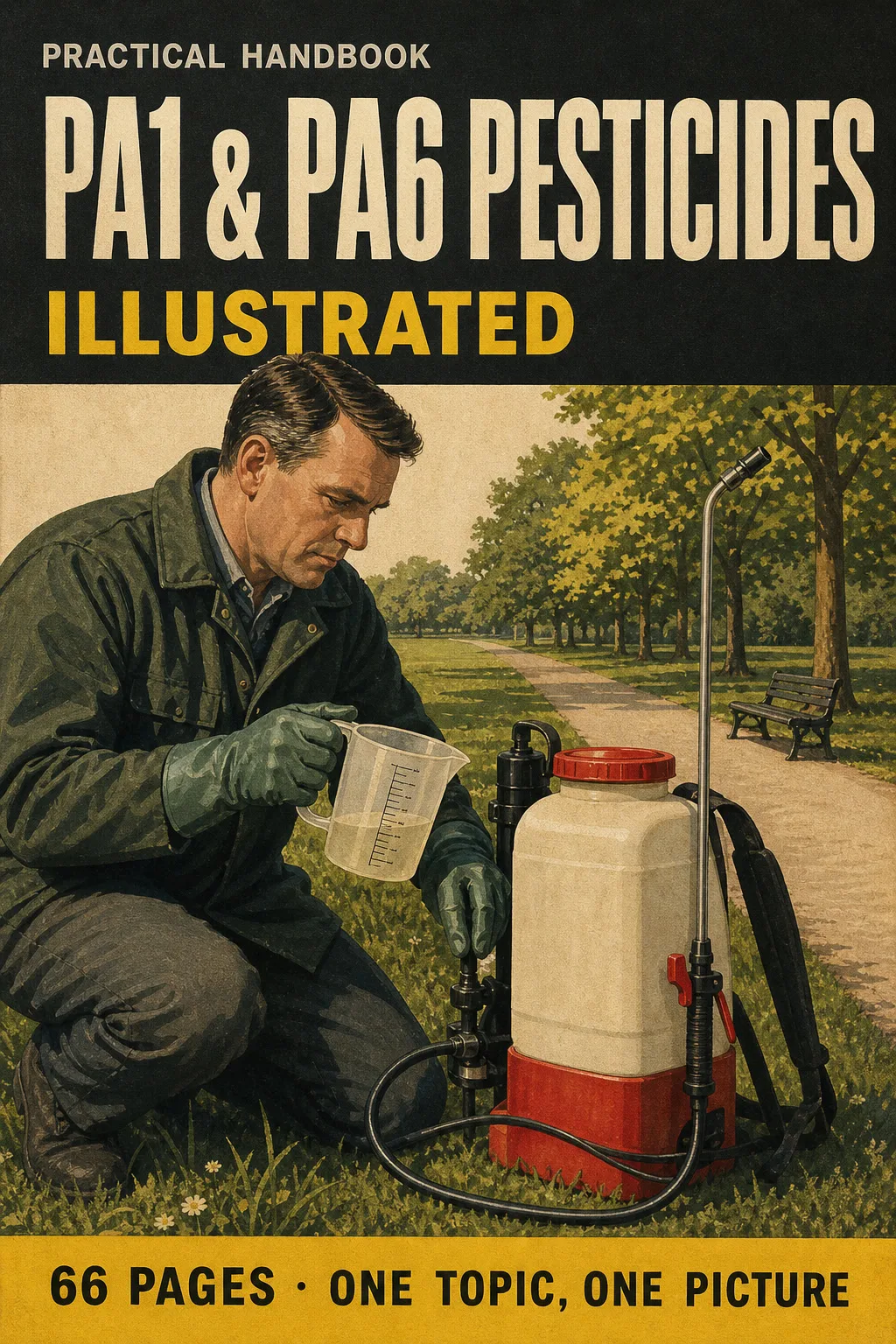
PA1 & PA6 and the Code of Practice in Drawings So the Label, Calibration and Buffer Zones Stick

The product label, COSHH and PPE, the knapsack sprayer, calibration, drift and wind, buffer zones, the pesticide store, spills and the triple rinse. Every topic has its own page: the drawing first, then what you need to remember. 66 illustrated pages.

GET PA1 & PA6 ILLUSTRATED

🔒 Secure checkout · PDF by email · 30-day guarantee

Every topic, its own pageEach rule drawn, with the explanation beside it
66 illustrated pages9 parts, from what a plant protection product is to the daily checklist before each job
Up-to-date sourcesCode of Practice for Using Plant Protection Products, the Scottish and NI Codes, Sustainable Use Regulations 2012 and COSHH 2002
PDF by emailFormat

Look Inside the Book

Every page has one big drawing and a box with the distances, steps and rules you need to know:

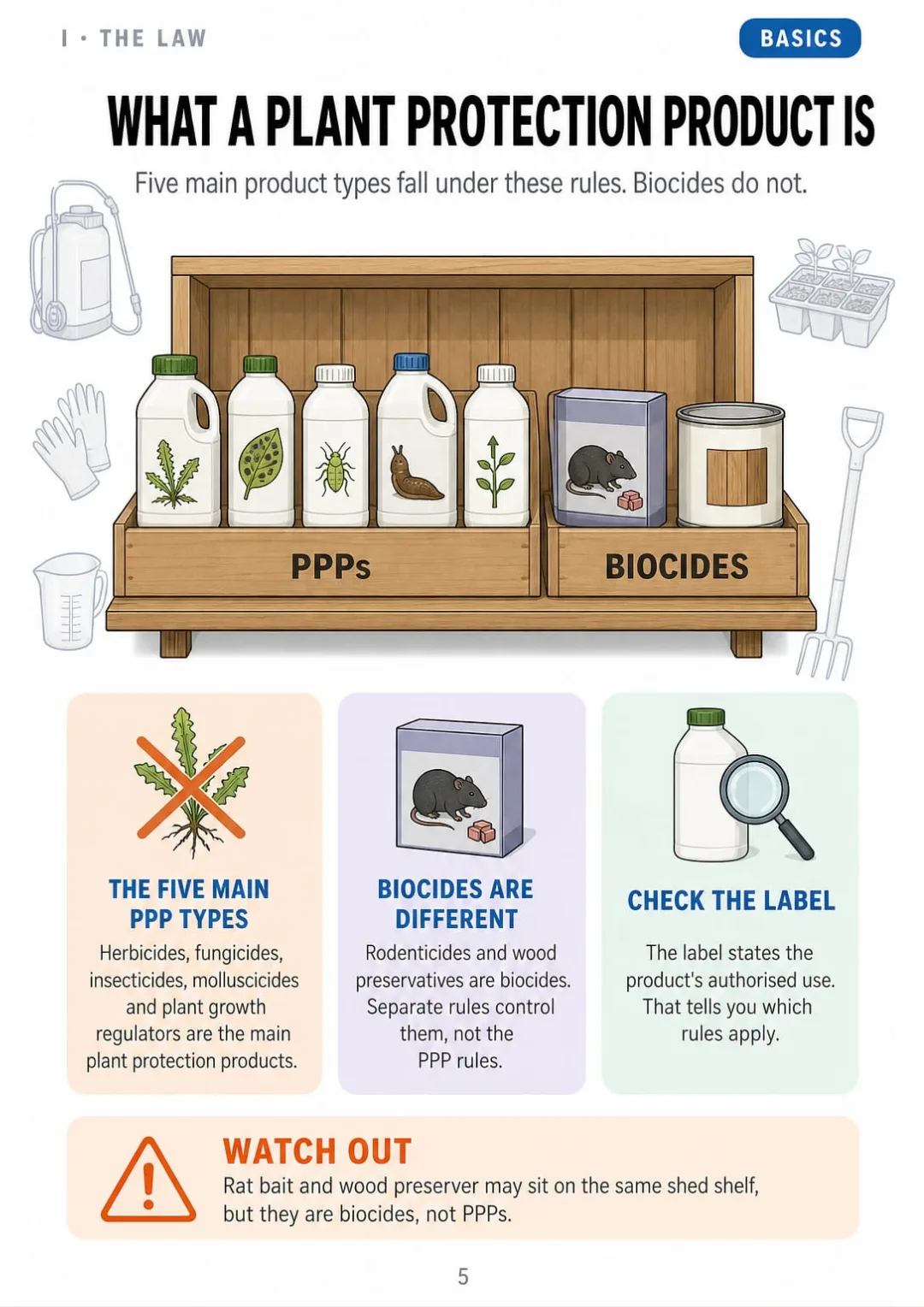
Herbicides, fungicides, insecticides, molluscicides and growth regulators are PPPs. Rodenticides are biocides.
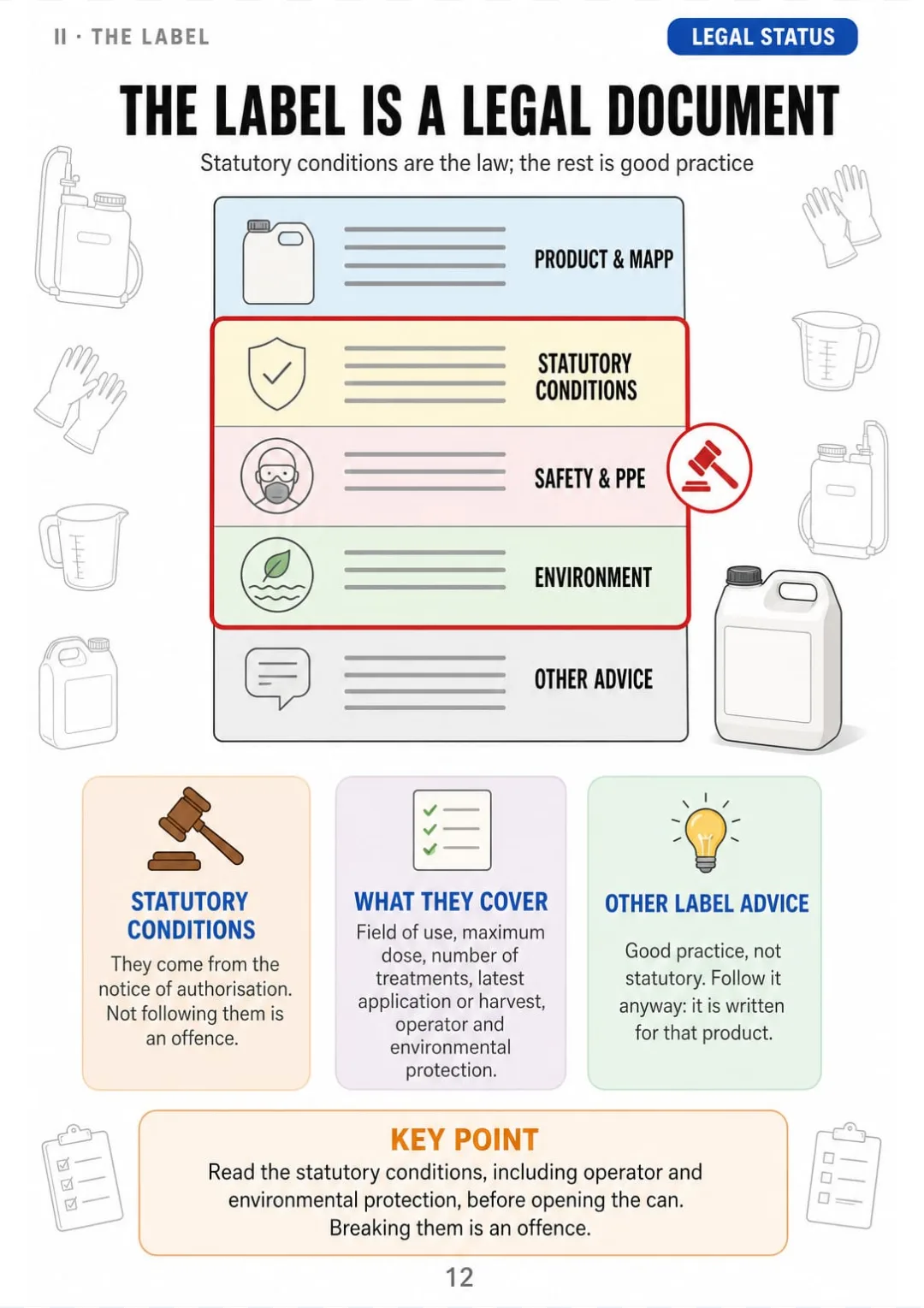
Statutory conditions of use come from the authorisation: ignoring them is an offence.
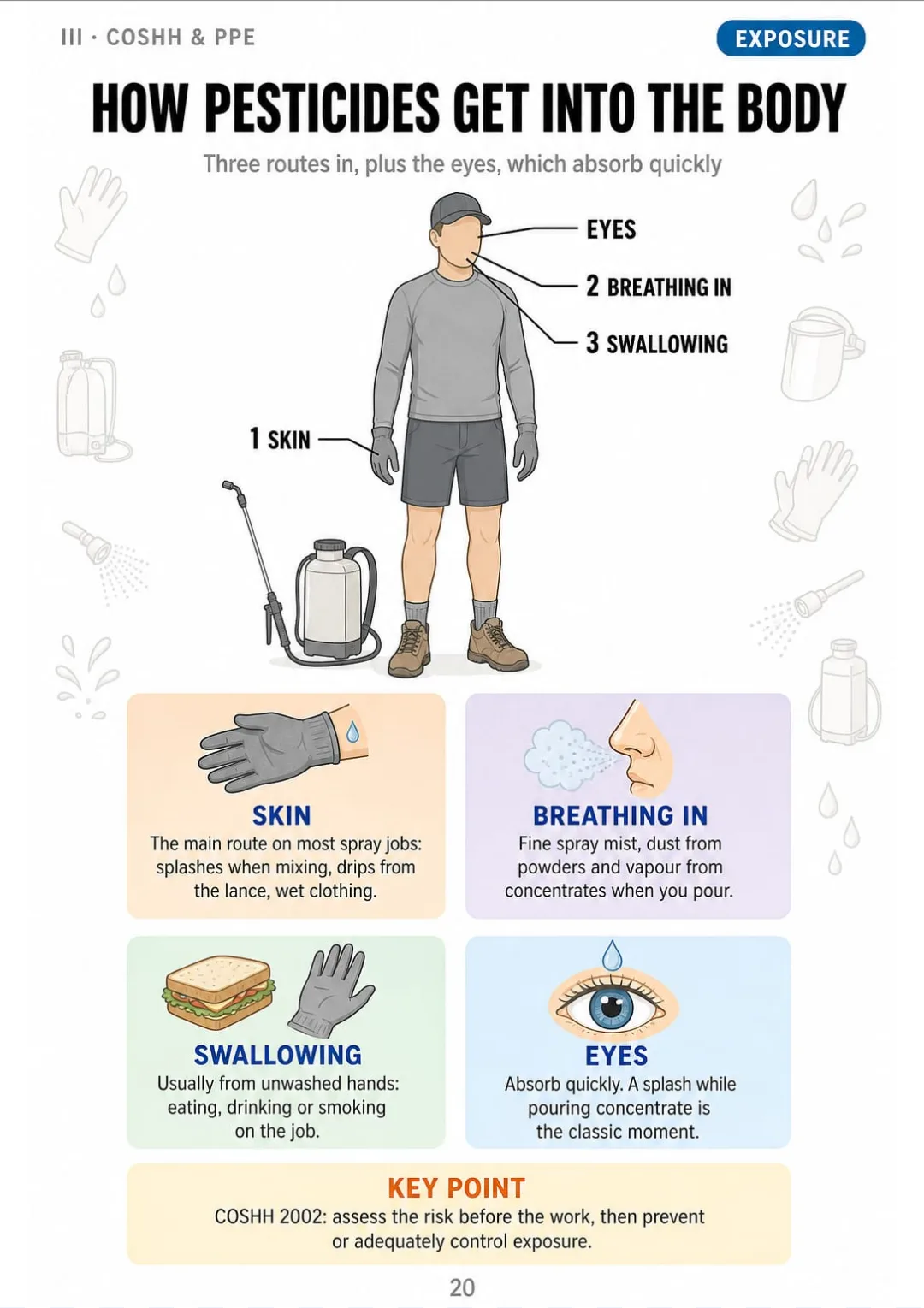
Three routes of entry plus the eyes, drawn on one body outline.
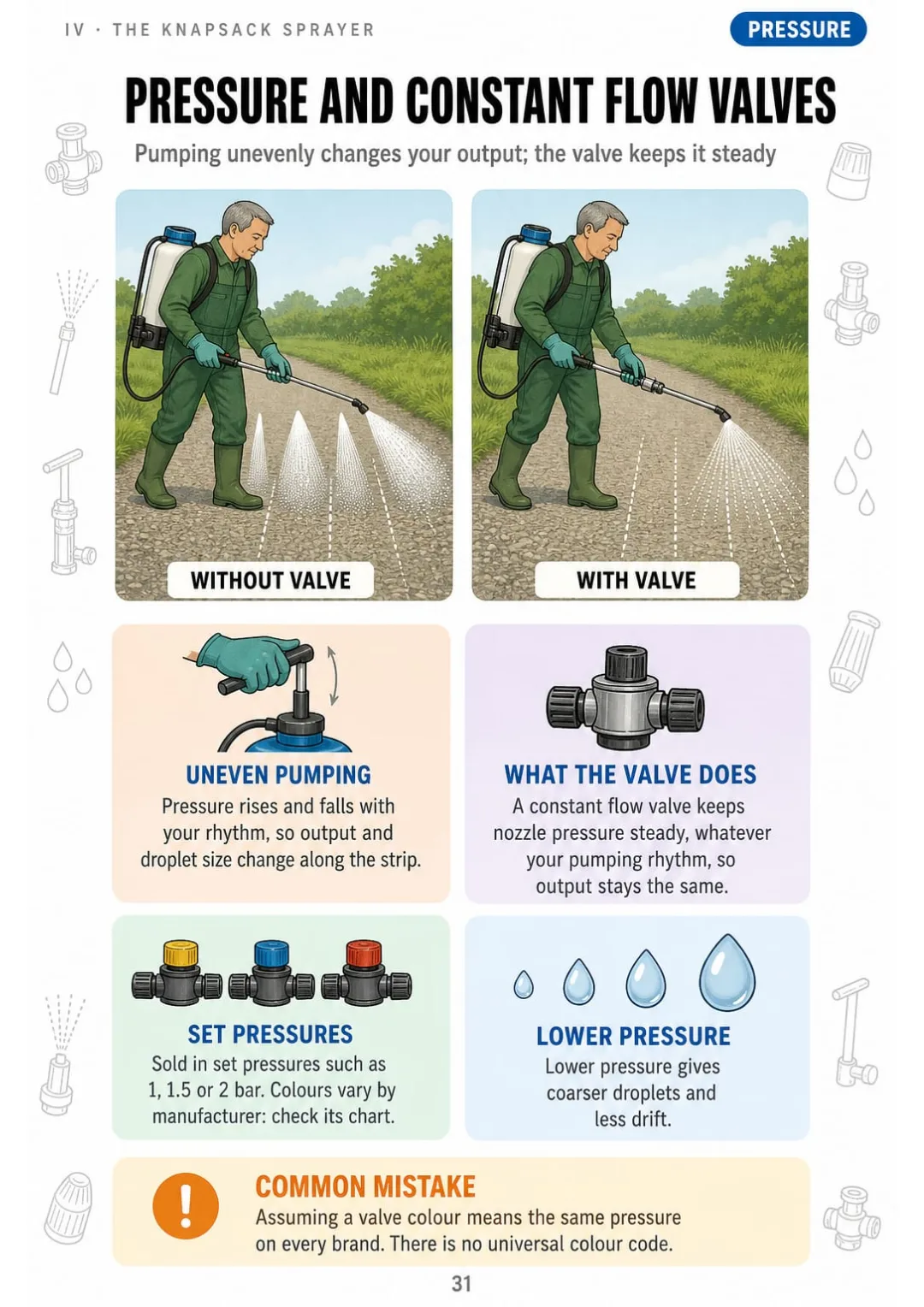
Same knapsack with and without a constant flow valve: uneven vs steady spray
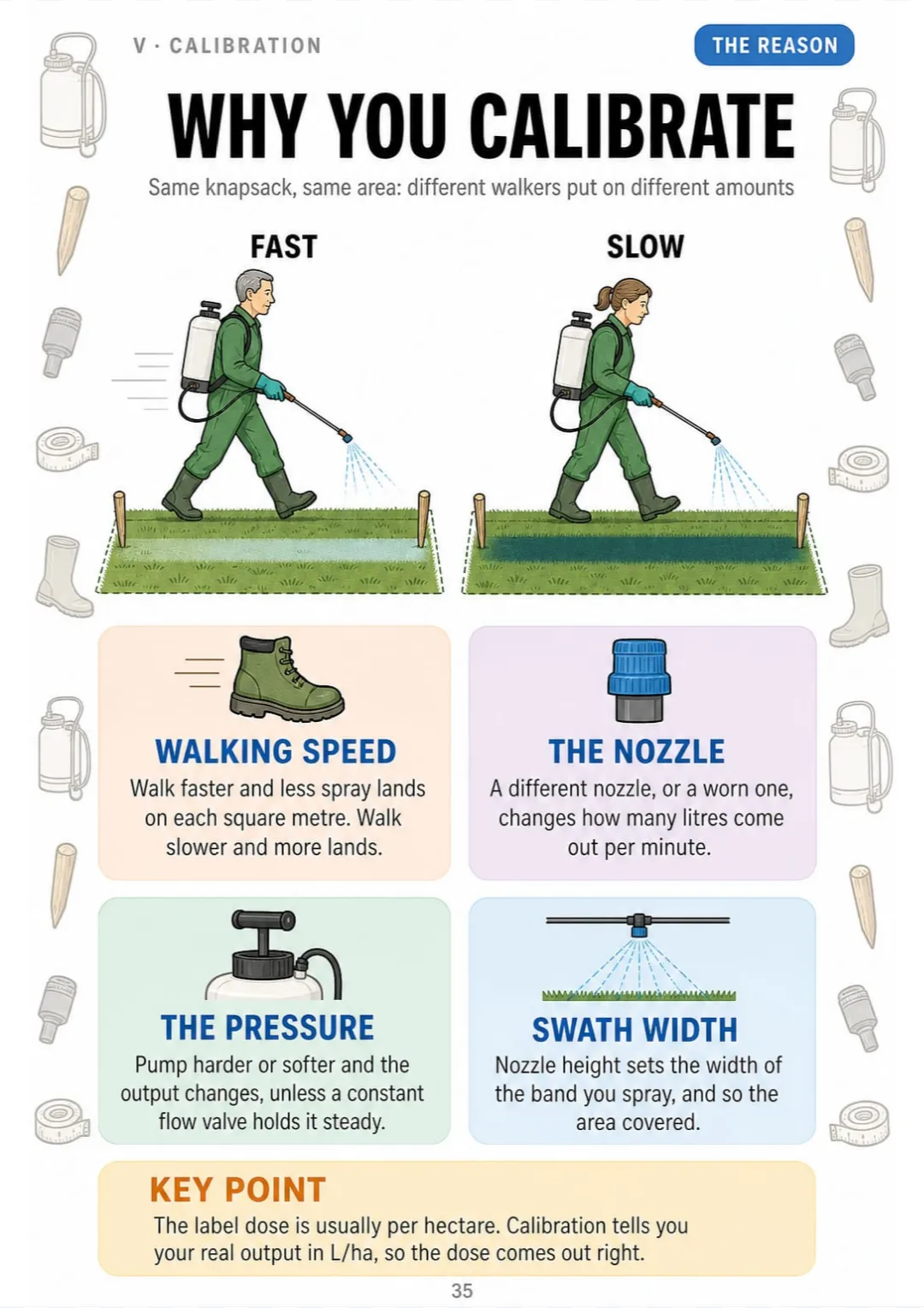
Speed, nozzle, pressure and swath width all change how many litres reach each hectare.
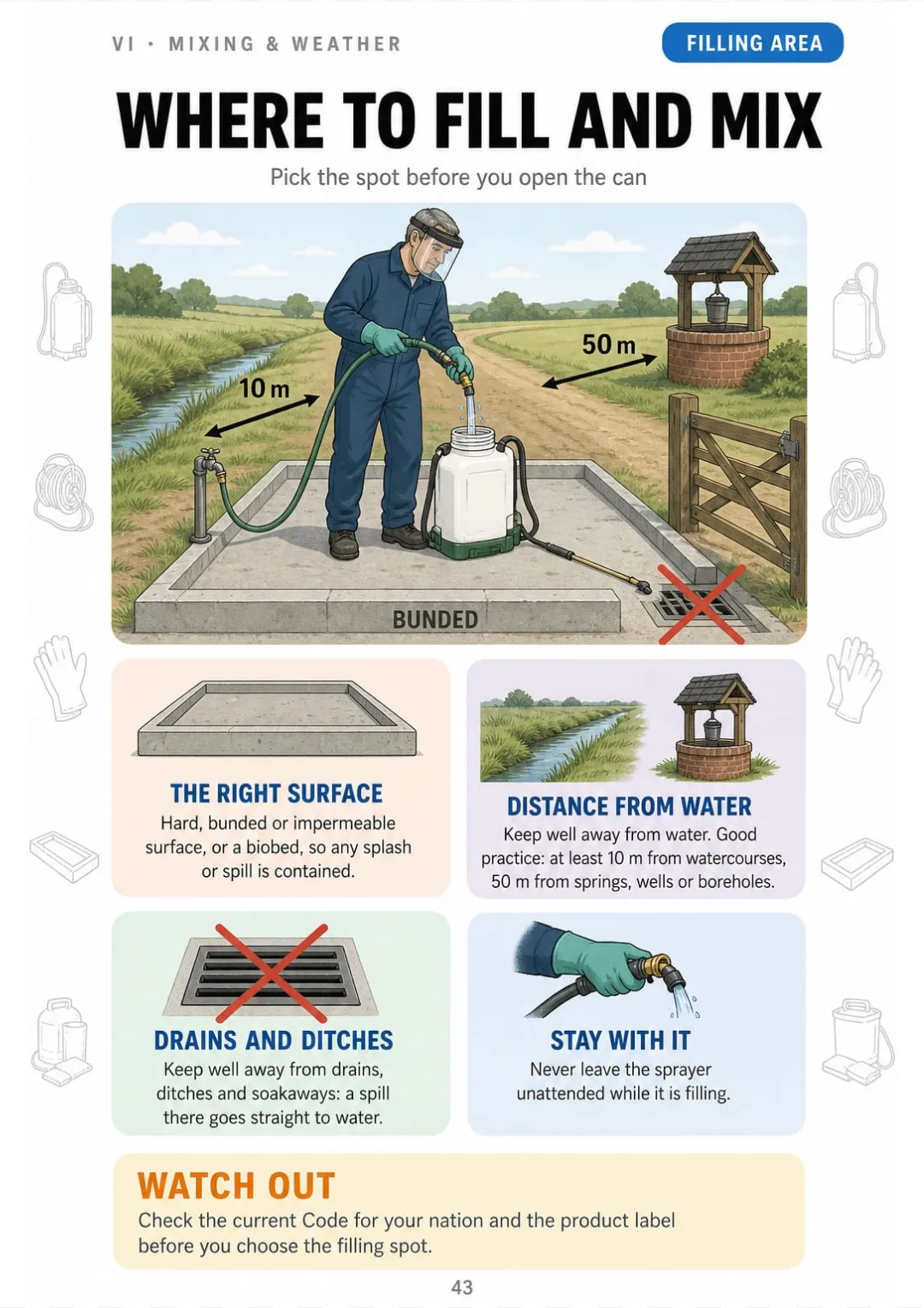
Filling area: bunded surface, at least 10 m from water, 50 m from a well (Code)
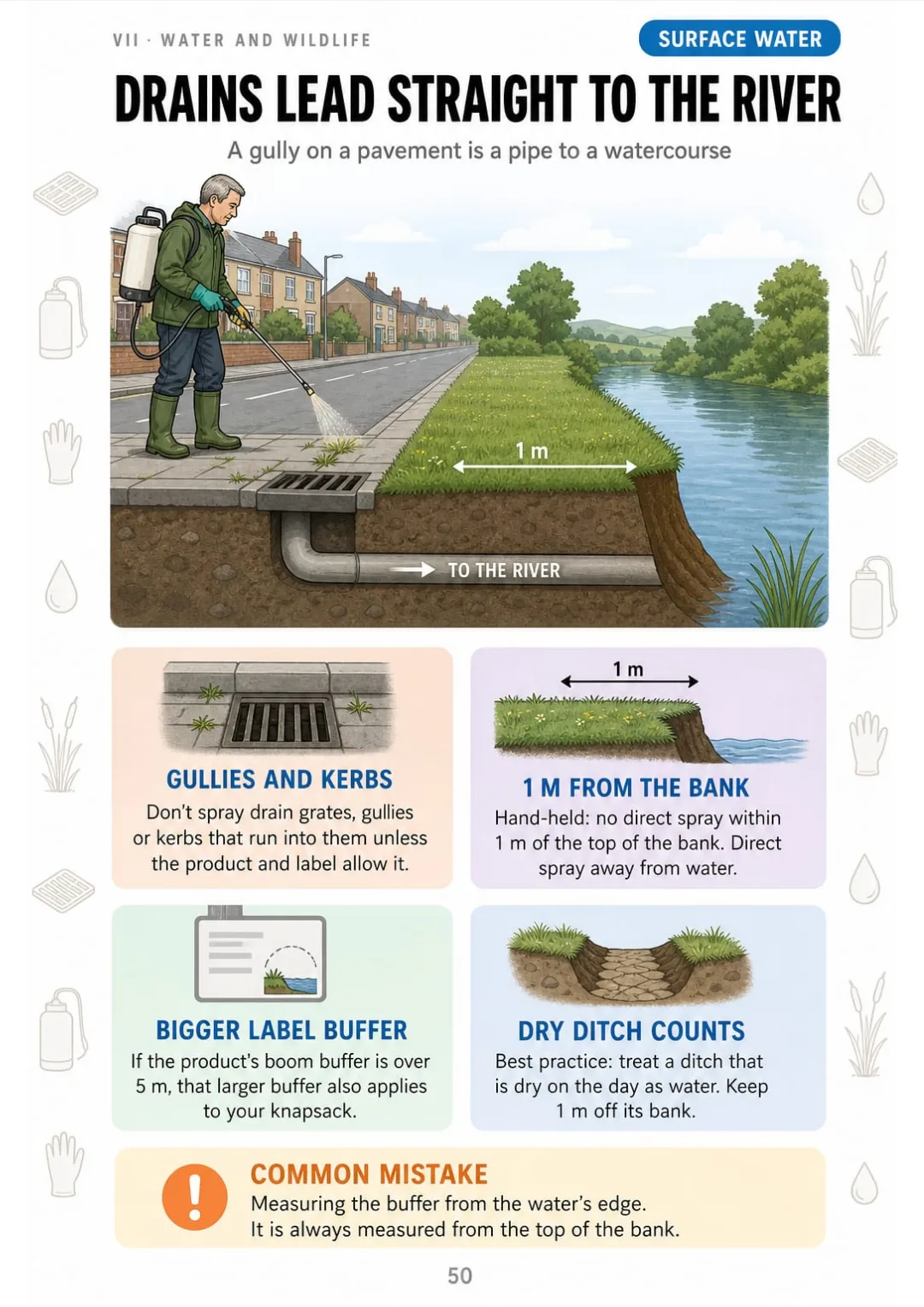
Hand-held buffer: 1 m from the top of the bank, even for a dry ditch
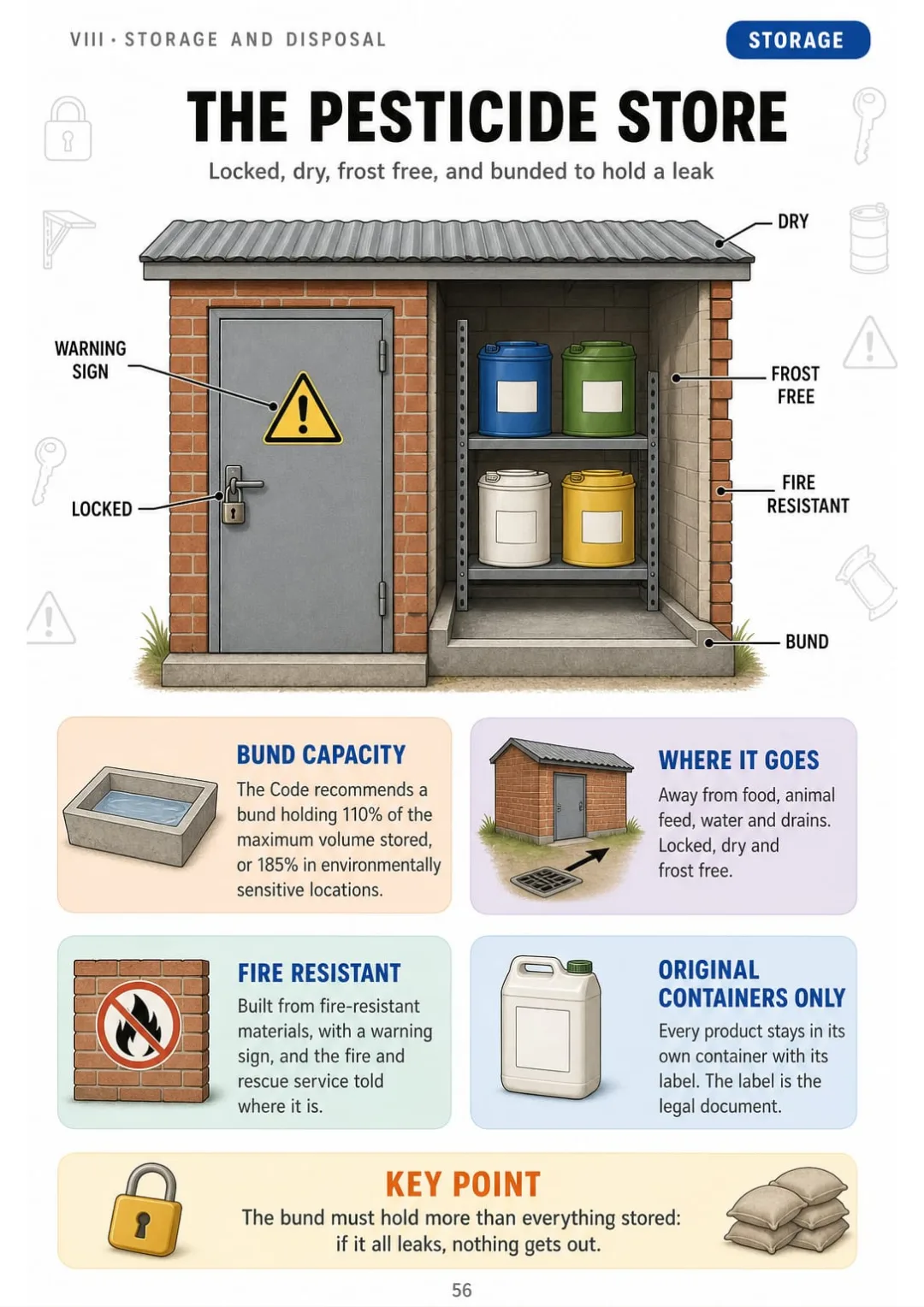
The store: locked, dry, frost free, away from water, bund of 110% (185% in sensitive places).

Swipe to see more →

These are real pages from the book. The table of contents is the full one: 9 parts and 62 topics.

The Problem Isn't You. It's How It Was Explained to You.

It's the evening before your PA6. Course notes open at routes of entry, and tomorrow the assessor will ask how a pesticide gets into your body.

The notes give you three dense paragraphs on dermal absorption, inhalation and ingestion, with the eyes tucked in somewhere. By the morning, the words have all run together.

Three routes of entry plus the eyes, drawn on one body outline.

In the book it's one body outline. The three routes of entry plus the eyes, each one marked on the drawing, so you can see where the spray gets in.

Same with the product label, the knapsack taken apart, calibration, the filling area and the pesticide store: each one has its own page.

You see it, you get it, and you answer without going back to the notes.

COMPARE FOR YOURSELF

The Same Topic, Two Ways to Study It

THIS
  • The manual: line after line
  • Label conditions explained only in words
  • You go into the assessment unsure
The product label, together with any accompanying leaflet, constitutes the principal means by which the statutory conditions of use, as determined at the time of authorisation, are communicated to the user. Such conditions, which may include the maximum individual dose, the maximum number of treatments, the latest time of application and any specified buffer zone requirements, are legally binding, and any use not in accordance with them constitutes an offence under the relevant legislation, irrespective of the operator's experience or the circumstances of application.
FOR THIS
  • The label in one drawing
  • The rules in a box
  • You see it and you get it
Statutory conditions of use come from the authorisation: ignoring them is an offence.
CONTENTS

Take a Look at the 9 Parts and 62 Topics

The law and your certificate, the product label, COSHH and PPE, the knapsack sprayer, calibration, mixing and the weather, water and wildlife, storage and spills, and an assessment-day review: 66 pages, all illustrated

IThe law and your certificate · pp. 5-11
  1. What a plant protection product is
  2. PA1 and PA6: what each one covers
  3. Why 'I've sprayed for years' no longer counts
  4. The laws behind the Code
  5. England, Wales, Scotland, Northern Ireland
  6. Approval: only use what is authorised
  7. Integrated Pest Management first
IIReading the product label · pp. 12-19
  1. The label is a legal document
  2. Product name, active substance and MAPP number
  3. Field of use: professional or amateur, and where
  4. Maximum dose and number of applications
  5. Harvest interval and re-entry
  6. Hazard pictograms and signal words
  7. Operator protection and PPE on the label
  8. Environmental protection and buffer zones
IIICOSHH, your health and PPE · pp. 20-27
  1. How pesticides get into the body
  2. Hazard vs risk
  3. The COSHH assessment in 5 steps
  4. The hierarchy of control
  5. PPE piece by piece
  6. Putting on and taking off PPE
  7. Signs of poisoning and first aid
  8. Hygiene on the job
IVThe knapsack sprayer · pp. 28-34
  1. The knapsack taken apart
  2. Hand-held equipment covered by PA6
  3. Nozzles: which one for which job
  4. Pressure and constant flow valves
  5. Pre-use checks with clean water
  6. Nozzle wear and when to replace
  7. Cleaning and maintenance after use
VCalibration in the same steps every time · pp. 35-42
  1. Why you calibrate
  2. The units you need: m², hectare, L/ha
  3. Step 1: mark out and walk the area
  4. Step 2: time it
  5. Step 3: catch it in a jug
  6. Step 4: work out the output
  7. Step 5: how much product goes in the tank
  8. How much to mix for the job
VIMixing, spraying and the weather · pp. 43-49
  1. Where to fill and mix
  2. Measuring and adding the concentrate
  3. Formulations and how they behave
  4. Drift: what makes it worse
  5. Wind and the Beaufort scale
  6. Temperature, rain and the time of day
  7. Spraying technique with a knapsack
VIIWater, wildlife and the public · pp. 50-55
  1. Protecting surface water and drains
  2. Groundwater and sensitive areas
  3. Spraying in or near water (PA6AW)
  4. Bees, birds and other wildlife
  5. The public, neighbours and amenity areas
  6. Records you must keep
VIIIStorage, transport, spills and disposal · pp. 56-61
  1. The pesticide store
  2. Transporting pesticides in the van
  3. A spill: contain, absorb, report
  4. Empty containers: the triple rinse
  5. Leftover spray and washings
  6. Unwanted and withdrawn products
IXAssessment-day review · pp. 62-66
  1. The PA1 in one page
  2. The PA6 practical in one page
  3. Calibration on one card
  4. Questions the assessor may ask
  5. Daily checklist before each job

One Page, One Topic, All Clear

Think of it this way:

It's assessment day. The assessor hands you a knapsack, a jug and a stopwatch, and asks for your output in litres per hectare.

In the book you open calibration and the five steps are drawn in order: mark out and walk the area, time it, catch it in a jug, work out the output, then the product for the tank. With a worked example beside it.

Speed, nozzle, pressure and swath width all change how many litres reach each hectare.

Same with the product label, PPE, drift and the Beaufort scale, the triple rinse and a spill: each one on its own page.

PA1 & PA6 Pesticides Illustrated is 66 pages: 62 topics in 9 parts, all drawn, and it finishes with an assessment-day review: the PA1 and the PA6 on one page each, calibration on one card and questions the assessor may ask.

What you see drawn, you don't have to memorize.

What's Inside PA1 & PA6 Pesticides Illustrated:

Ipp. 5-11

The law and your certificate

What a plant protection product is, what PA1 and PA6 each cover, the laws behind the Code, the differences across the four nations, approval and IPM

IIpp. 12-19

Reading the product label

The label as a legal document, the MAPP number, field of use, maximum dose, harvest interval, pictograms, PPE and buffer zones

IIIpp. 20-27

COSHH, your health and PPE

Routes of entry, hazard vs risk, the COSHH assessment in 5 steps, the hierarchy of control, PPE piece by piece, first aid and hygiene

IVpp. 28-34

The knapsack sprayer

The knapsack taken apart, hand-held kit under PA6, nozzles, pressure and constant flow valves, pre-use checks, wear and cleaning

Vpp. 35-42

Calibration in the same steps every time

Why you calibrate, m² to hectares and L/ha, and the five steps from walking the area to filling the tank: you work out your output and how much product to mix, with a worked example

VIpp. 43-49

Mixing, spraying and the weather

Where to fill and mix, measuring the concentrate, formulations, drift, wind and the Beaufort scale, the weather and spraying technique

VIIpp. 50-55

Water, wildlife and the public

Surface water and drains, groundwater, spraying near water (that needs the separate PA6AW unit), bees and wildlife, the public and the records you must keep

VIIIpp. 56-61

Storage, transport, spills and disposal

The pesticide store, carrying products in the van, a spill step by step, the triple rinse, leftover spray and unwanted products

IXpp. 62-66

Assessment-day review

The PA1 and the PA6 practical on one page each, calibration on one card, questions the assessor may ask and a daily pre-job checklist

At the end of the book: An assessment-day review: the PA1 and the PA6 on one page each, calibration on one card and a daily pre-job checklist.
Plus: 2 Free Books

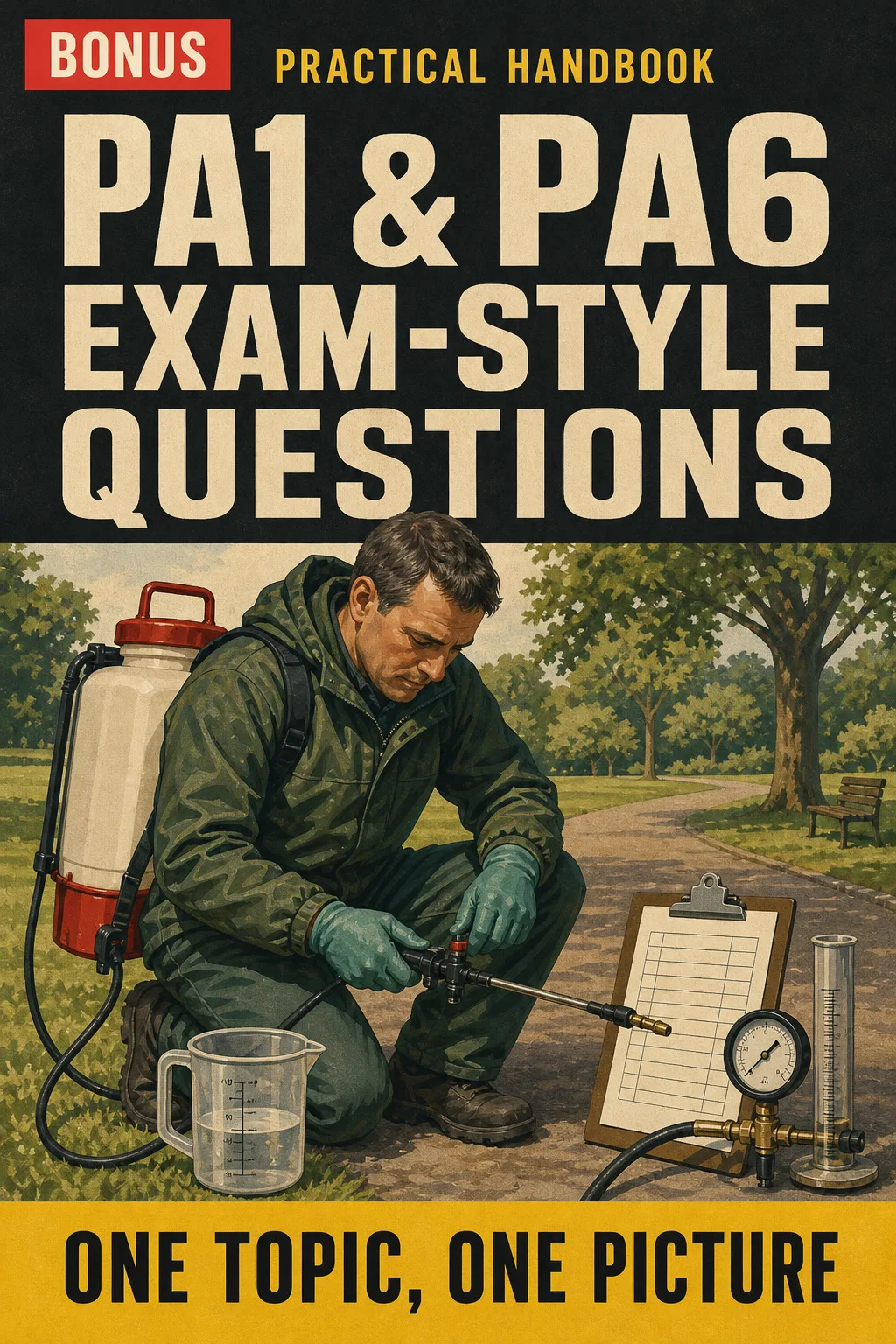
PA1 & PA6 Exam-Style Questions

BONUS 1: «PA1 & PA6 Exam-Style Questions»

Value on its own: US$ 17.90

Test yourself with exam-style questions and clear worked answers, so you know which pages to go over again before the assessment.

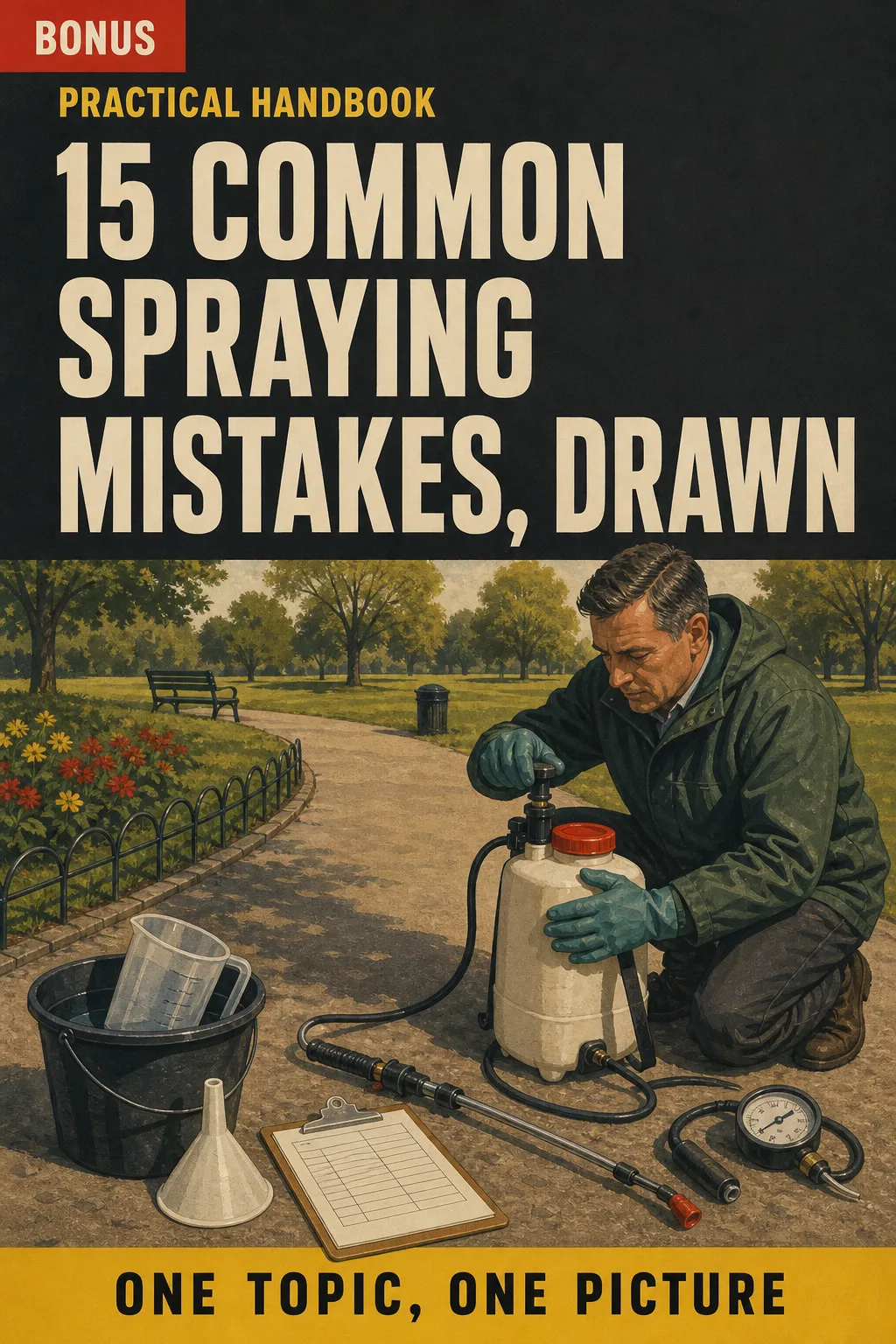
15 Common Spraying Mistakes, Drawn

BONUS 2: «15 Common Spraying Mistakes, Drawn»

Value on its own: US$ 14.90

See the most common mistakes drawn before and after, from the wrong nozzle to rinsing near a drain, so you spot them on your own job.

PA1 & PA6 Pesticides Illustrated with 2 Free Books

  • PA1 & PA6 Pesticides Illustrated: 66 illustrated pagesUS$ 63
  • BONUS 1: PA1 & PA6 Exam-Style QuestionsUS$ 17.90
  • BONUS 2: 15 Common Spraying Mistakes, DrawnUS$ 14.90
  • High-resolution PDF to printIncluded
Total value US$ 95.80
YOUR PRICE:
US$ 27
You save US$ 68.80
YES, I WANT PA1 & PA6 PESTICIDES ILLUSTRATED FOR US$ 27

📄 This is a digital PDF book sent to your email: nothing is printed or shipped.

Secure purchaseEncrypted payment30-day guarantee

PDF by email: We email you PA1 & PA6 Pesticides Illustrated as a PDF, together with the two free books. It's a single payment: no installments, no extra charges.

Who This Book Is For

You're starting PA1 and PA6

You're starting PA1 and PA6

Every topic of the foundation unit and the knapsack unit is on its own drawn page, so you can study a bit each evening and see where each piece fits.

Your assessment is booked

Your assessment is booked

Calibration in the same five steps every time, with a worked example, and a review section that puts the PA1 and the PA6 on one page each.

You already spray for a living

You already spray for a living

A printed reference for the van: label checks, buffer zones, the filling area, spills and a daily checklist before each job.

Everything You Get Today

US$ 95.80US$ 27
YES, I WANT PA1 & PA6 PESTICIDES ILLUSTRATED FOR US$ 27

📄 This is a digital PDF book sent to your email: nothing is printed or shipped.

30DAYS
GUARANTEE

30-Day Guarantee

Try PA1 & PA6 Pesticides Illustrated for 30 days, bonus books included.

We refund everything if the file won't open, if the book isn't what you see here, if you were charged twice or if the email doesn't arrive. Just email us.

You pay once. No subscriptions.

Frequently Asked Questions

Is it for me if I've been spraying for years and now need the certificate?

Yes. It doesn't assume you're new to the job: it puts what the Code of Practice asks for in order, one topic per page, so you can check what you already do and fill the gaps before the assessment.

Where does the content come from?

From the Code of Practice for Using Plant Protection Products (England and Wales), the equivalent Codes for Scotland and Northern Ireland, the Plant Protection Products (Sustainable Use) Regulations 2012, COSHH 2002 and HSE guidance. It works wherever you are in the UK: the differences between England, Scotland, Wales and Northern Ireland have their own page, and figures that can change are flagged so you check the latest official version.

Is it official material?

No. It's an independent illustrated study book. It isn't issued or endorsed by HSE, Defra or any awarding body.

Does it replace the course or the assessment?

No. It's for preparing and revising. Your certificate comes only from the awarding body after your assessment.

Are the practice questions the ones in the assessment?

No. The exam-style questions are written for this book, to help you see which pages to go over again.

How does it arrive?

As a PDF by email, to the address you enter when you pay.

Do I have to pay every month?

No. It's a one-off payment.

Can I have it on paper?

Yes. The PDF prints on standard A4, so you can keep a copy in the van.

How does the refund work?

You have 30 days. We refund everything if the file won't open, if the book isn't what you see on this page, if you were charged twice or if the email doesn't arrive: just email us.

Before You Close This Page

No more rereading the Code and forgetting it all.

Knapsack calibration: you see it drawn, and that's it.

You walk into the assessment knowing where everything is.

Drawings make studying faster.

The book is right below.

One-time payment: US$ 27 · Guarantee: 30 days · PDF by email

YES, I WANT PA1 & PA6 PESTICIDES ILLUSTRATED FOR US$ 27

📄 This is a digital PDF book sent to your email: nothing is printed or shipped.